
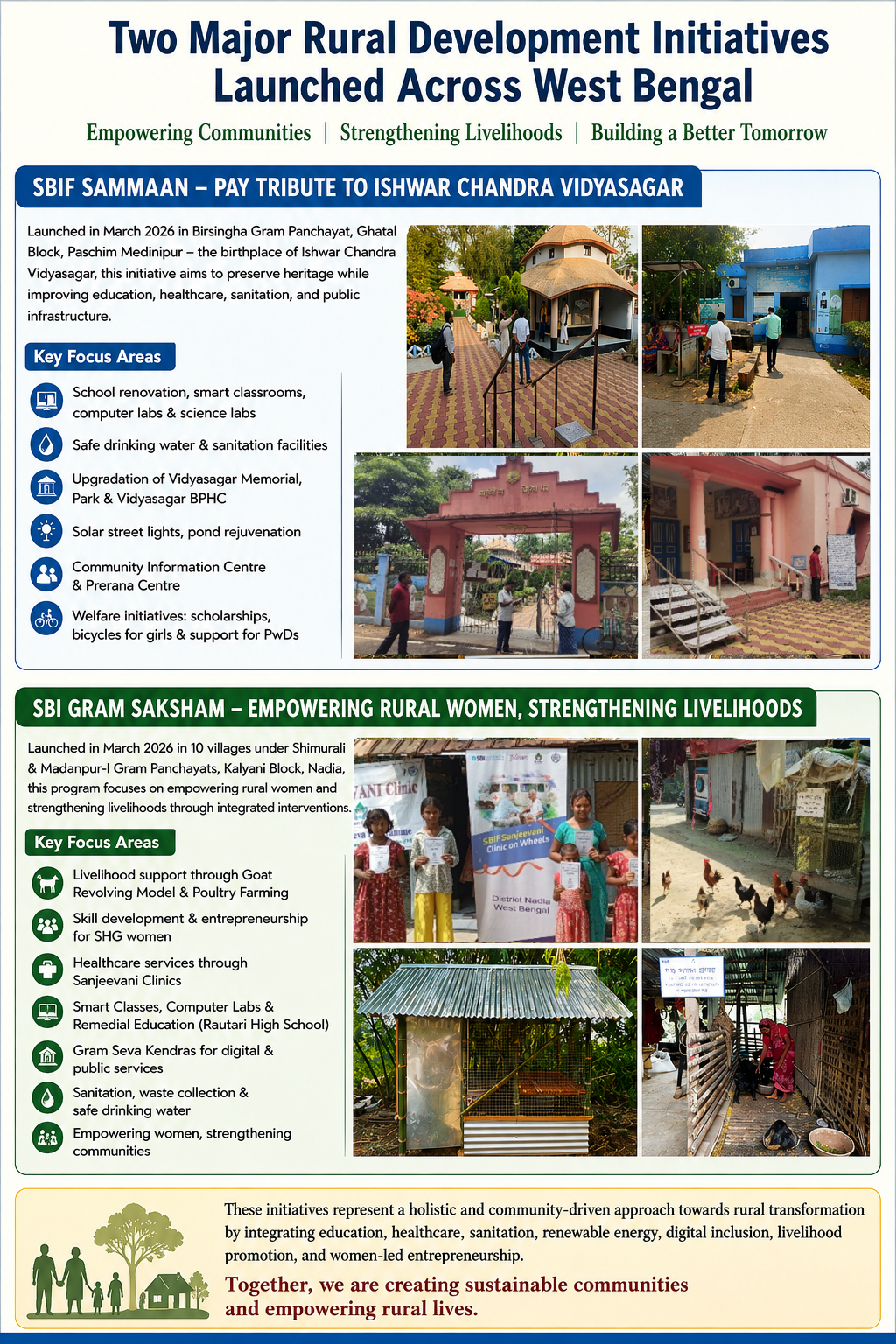
Sabuj Sangha, with the support of SBI Foundation, has launched two significant community development initiatives — SBIF Sammaan – Pay Tribute to Ishwar Chandra Vidyasagar in Paschim Medinipur and SBI Gram Saksham in Nadia district — from March 2026. These initiatives aim to promote sustainable rural development through integrated interventions in education, healthcare, sanitation, livelihood enhancement, renewable energy, digital inclusion, and women empowerment.
The SBIF Sammaan project has been initiated in Birsingha Gram Panchayat under Ghatal Block of Paschim Medinipur, the birthplace of renowned social reformer and educationist Ishwar Chandra Vidyasagar. The initiative seeks to preserve the rich heritage of Birsingha while improving essential community infrastructure and public services.
As part of the preliminary phase, extensive surveys, consultations, and need assessment visits were conducted across schools, ICDS centres, Vidyasagar BPHC, Ishwar Chandra Vidyasagar Memorial, and Vidyasagar Park. Discussions with stakeholders focused on school renovation, establishment of smart classrooms, computer laboratories, girls’ common rooms, science laboratories, improved sanitation facilities, and access to safe drinking water.
The project also includes plans for the upgradation of the Ishwar Chandra Vidyasagar Memorial and Vidyasagar Park, installation of solar street lights, pond rejuvenation, establishment of a Community Information Centre and Prerana Centre, and implementation of welfare initiatives such as scholarships for rural students, bicycle distribution for girls, and support for Persons with Disabilities (PwDs). Community stakeholders, Panchayat representatives, educators, healthcare workers, and local residents have actively participated in the planning process and expressed strong support for the initiative.
At the same time, the SBI Gram Sakshamprogram has commenced in 10 villages under Shimurali and Madanpur-I Gram Panchayats of Kalyani Block in Nadia. The programme focuses on strengthening rural livelihoods and empowering economically vulnerable communities, particularly women associated with Self-Help Groups (SHGs).
Designed as a comprehensive rural livelihood and empowerment initiative, the programme will directly benefit nearly 500 women through scientific goat rearing, poultry farming, entrepreneurship development, and skill-building activities. A unique “Goat Revolving Model” has been introduced to ensure long-term sustainability and community ownership, whereby beneficiaries will pass on goat kids to other vulnerable women after reproduction, thereby extending livelihood opportunities within the community.
During the initial implementation phase, household surveys and village-level consultations were carried out to identify vulnerable families and assess socio-economic conditions. Healthcare services through Sanjeevani Clinics have already been operationalized in 10 villages, providing medical consultations, health check-ups, and diagnostic services to hundreds of villagers.
Educational support activities including Smart Classes, Computer Laboratory sessions, remedial education, library services, and Girls’ Common Room facilities are also being regularly conducted at Rautari High School, benefiting more than 1,100 students. Additionally, Gram Seva Kendras established under the programme are facilitating access to digital and essential public services, while sanitation and environmental initiatives such as waste collection systems and safe drinking water facilities are being strengthened across the project villages.
According to officials of Sabuj Sangha, both initiatives represent a holistic and community-driven approach towards rural transformation. By integrating education, healthcare, sanitation, renewable energy, digital inclusion, livelihood promotion, and women-led entrepreneurship, the programmes aim to create sustainable development models that improve the socio-economic conditions and overall quality of life of rural communities across West Bengal.